Industry · Cement
End-to-end energy cost optimization for the cement industry
Our AI-powered platform unifies energy procurement, flexibility control, portfolio management and CO₂ reporting — so you can run your cement production cost-efficiently and sustainably.
Book a meetingIndustry-specific challenges
Energy is the second-largest cost block in cement production.
High energy costs
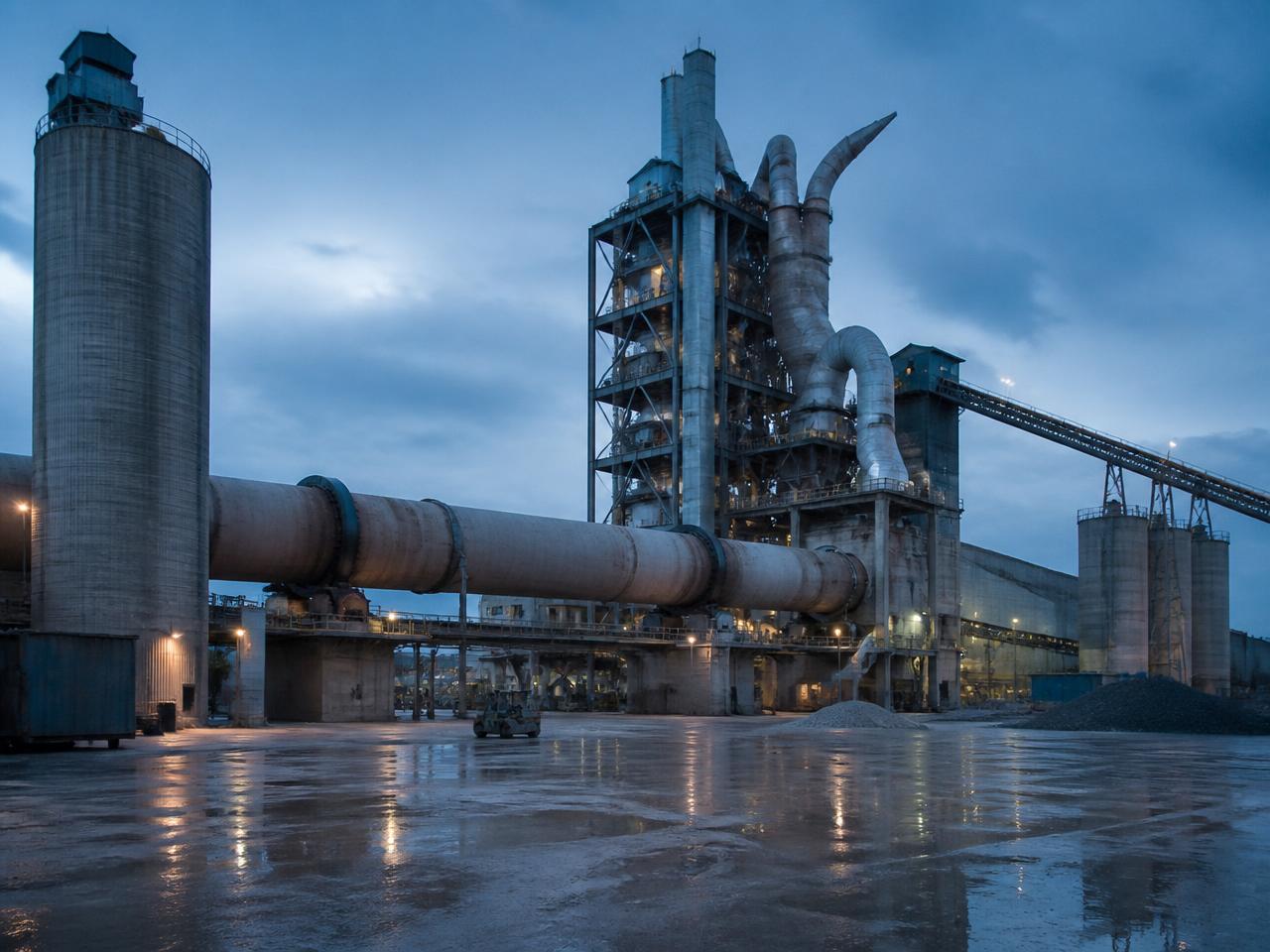
Cement manufacturing is one of the most energy-intensive industries. Fuels and electricity for rotary kilns and cement mills account for up to 40% of production costs.
Volatile markets
Fluctuating power, gas and coal prices make long-term planning difficult and put competitiveness at risk.
CO₂ reporting obligations
CSRD, EU-ETS and national rules require complete and audit-proof emissions reporting — especially relevant for process-related CO₂ emissions from clinker production.
Complex load profiles
Cement mills, rotary kilns and clinker coolers have specific load patterns — flexibilizing them unlocks significant savings on the spot market.
Energy flexibility
Monetize flexibility. Without capex.
Cement producers have substantial controllable loads — from cement mills to clinker coolers. avoltra turns them into revenue.
Cement mills & grinding plants
Leverage the over-sizing of your grinding plants: intermediate silo capacity lets you shift cement grinding into low-price hours — with full clinker supply.
Battery storage
Integrate battery storage for load shifting and peak shaving: charge in cheap hours, discharge in expensive ones — for maximum cost savings.
Spot market optimization
Automated schedule optimization based on EPEX Day-Ahead & Intraday prices — your mills run when power is cheapest.
Balancing energy & aFRR
Unlock additional revenue by participating in the balancing market — your controllable load becomes a revenue stream.
Energy procurement
Optimize procurement. Lower costs.
AI-powered procurement strategies for energy-intensive cement producers — data-driven, automated and tailored to your load profiles.
Real-time market data
Track power and fuel prices live and react instantly to market movements.
AI procurement recommendations
Our algorithms identify optimal moments for tranching and procurement — aligned with your load profiles.
Portfolio overview
All contracts, PPAs, grid fees and surcharges centrally managed — across every site.
Risk management
Assess and steer market risks with integrated scenarios and hedging strategies.
Platform overview
One platform. All modules. Fully integrated.
avoltra unifies every aspect of energy management — purpose-built for the cement industry.
FAQ
Frequently asked questions
How can a cement plant reduce its electricity costs without producing less?
Cement mills are the largest controllable electricity consumers in a cement plant, and intermediate and finished-product silos act as buffers. This is why, in many plants, grinding can be shifted to hours with low day-ahead and intraday prices while keeping the same tonnage. avoltra maps mills, silos and products in a digital twin and uses it to create a cost-optimized mill schedule every day with a 7-day preview, without investment in new equipment.
Does flexible mill operation put our delivery capability at risk?
No, delivery capability always takes priority in the model. Stored as fixed constraints are minimum silo fill levels, product changeovers, minimum run and downtime periods, maintenance windows and your shift models, as well as the peak-load time windows, so that savings from atypical grid usage are preserved. The schedule is a recommendation to the control room and can be manually overridden at any time in case of short-term changes.
Can the rotary kiln also be operated flexibly?
Generally not, and that is not necessary either. The kiln and raw mill are closely coupled and run continuously. The flexibility potential lies mainly in the cement mills together with the silos, and avoltra does not intervene in kiln operation. Depending on the site, battery storage and on-site generation such as PV are additional levers.
How much savings are realistic for cement mills, and how are they verified?
That depends on mill capacity, utilization, silo buffer and procurement structure. In our projects in the lime and cement industry, savings reached up to 97,000 euros per megawatt of flexible mill capacity per year. Before the project, we prepare a potential analysis from your load profiles and production data. During operation, the platform reports the savings transparently, for example as energy costs per tonne compared with a historical baseline.